Peripartum cardiomyopathy and antiphospholipid syndrome: a rare association revealed by a right ventricular thrombus. A case report
DOI:
https://doi.org/10.47487/apcyccv.v7i3.581Keywords:
Peripartum Cardiomyopathy, Thrombosis, Antiphospholipid SyndromeAbstract
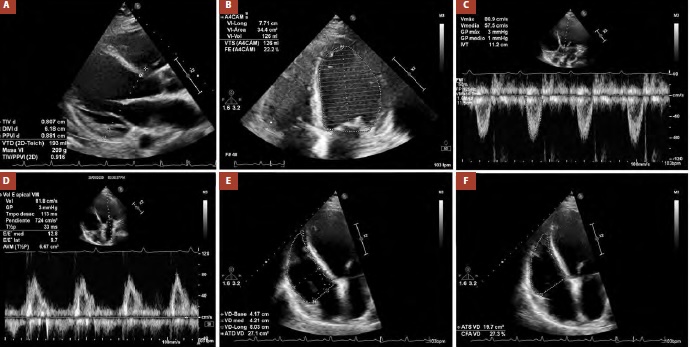
Peripartum cardiomyopathy (PPCM) is uncommon, and its association with antiphospholipid syndrome (APS) and right ventricular (RV) thrombus is exceptional. We report a 33-year-old woman who, three months after cesarean delivery for severe preeclampsia, developed acute heart failure with severe biventricular dysfunction requiring mechanical ventilation. An RV thrombus was identified; two computed tomographic pulmonary angiograms, one week apart, were negative for pulmonary embolism. Thrombophilia work-up disclosed persistently positive lupus anticoagulant on repeat testing 12 weeks apart, supporting APS. Therapeutic anticoagulation led to complete thrombus resolution after 10 days, and optimized heart failure therapy was followed by hemodynamic improvement and successful extubation. Coronary angiography ruled out ischemic heart disease, and endomyocardial biopsy showed no histologic evidence of myocarditis, supporting PPCM. Myocardial recovery was partial, requiring follow-up within an advanced heart failure program. This case highlights the need to evaluate secondary prothrombotic conditions, particularly APS, and to institute early anticoagulation in PPCM with intracardiac thrombosis.
Downloads
References
Bauersachs J, König T, van der Meer P, Petrie MC, Hilfiker-Kleiner D, Mbakwem A, et al. Pathophysiology, diagnosis and management of peripartum cardiomyopathy: a position statement from the Heart Failure Association of the European Society of Cardiology Study Group on peripartum cardiomyopathy. Eur J Heart Fail. 2019;21(7):827-843. doi: 10.1002/ejhf.1493.
Sigauke FR, Ntsinjana H, Tsabedze N. Peripartum cardiomyopathy: a comprehensive and contemporary review. Heart Fail Rev. 2024;29(5):1261-1278. doi: 10.1007/s10741-024-10435-5.
De Backer J, Haugaa KH, Hasselberg NE, de Hosson M, Brida M, Castelletti S, et al. ESC Scientific Document Group. 2025 ESC Guidelines for the management of cardiovascular disease and pregnancy. Eur Heart J. 2025;46(43):4462-4568. doi: 10.1093/eurheartj/ehaf193.
Viljoen C, Hoevelmann J, Sliwa K. Peripartum cardiomyopathy: risk factors and predictors of outcome. Curr Opin Cardiol. 2023;38(3):223- 232. doi: 10.1097/HCO.0000000000001037.
Sliwa K, Mebazaa A, Hilfiker-Kleiner D, Petrie MC, Maggioni AP, Laroche C, et al. Clinical characteristics of patients from the worldwide registry on peripartum cardiomyopathy (PPCM): EURObservational Research Programme in conjunction with the HFA of the ESC Study Group on PPCM. Eur J Heart Fail. 2017;19(9):1131-1141. doi: 10.1002/ejhf.780.
Spracklen TF, Chakafana G, Schwartz PJ, Kotta MC, Shaboodien G, Sliwa K, et al. Genetics of peripartum cardiomyopathy: current knowledge, future directions and clinical implications. Genes (Basel). 2021;12(1):103. doi: 10.3390/genes12010103.
Hoevelmann J, Engel ME, Muller E, Hohlfeld A, Böhm M, Sliwa K, et al. A global perspective on the management and outcomes of peripartum cardiomyopathy: a systematic review and meta-analysis. Eur J Heart Fail. 2022;24(9):1719-1736. doi: 10.1002/ejhf.2603.
Barbhaiya M, Zuily S, Naden R, Hendry A, Manneville F, Amigo MC, et al. The 2023 ACR/EULAR Antiphospholipid Syndrome Classification Criteria. Arthritis Rheumatol. 2023 Oct;75(10):1687-1702. doi: 10.1002/art.42624.
McNamara DM, Elkayam U, Alharethi R, Damp J, Hsich E, Ewald G, et al. Clinical outcomes for peripartum cardiomyopathy in North America: results of the IPAC study (Investigations of PregnancyAssociated Cardiomyopathy). J Am Coll Cardiol. 2015;66(8):905-914. doi: 10.1016/j.jacc.2015.06.1309.
Davis MB, Arany Z, McNamara DM, Goland S, Elkayam U. Peripartum cardiomyopathy: JACC state-of-the-art review. J Am Coll Cardiol. 2020;75(2):207-221. doi: 10.1016/j.jacc.2019.11.014.
Arany Z. Peripartum cardiomyopathy. N Engl J Med. 2024;390(2):154- 164. doi: 10.1056/NEJMra2306667.
Bültmann BD, Klingel K, Näbauer M, Wallwiener D, Kandolf R. High prevalence of viral genomes and inflammation in peripartum cardiomyopathy. Am J Obstet Gynecol. 2005;193(2):363-365. doi: 10.1016/j.ajog.2005.01.022.
Fu K, Zhang H, Chen N, Hu Y, Xiao J, Zhang X, et al. Risk factors for intracardiac thrombus in peripartum cardiomyopathy: a retrospective study in China. ESC Heart Fail. 2023;10(1):148-158. doi: 10.1002/ehf2.14219.
Radakrishnan A, Dokko J, Pastena P, Kalogeropoulos AP. Thromboembolism in peripartum cardiomyopathy: a systematic review. J Thorac Dis. 2024;16(1):645-660. doi: 10.21037/jtd-23-945.
Badge M, Nagashweta LS, Rajagopalan K, Görlinger K, Kapoor PM. Peripartum cardiomyopathy and thrombosis—a match made in hell! J Card Crit Care TSS. 2025;9(4):198-201. doi: 10.25259/JCCC_47_2024.
Bates SM, Middeldorp S, Rodger M, James AH, Greer IA. Guidance for the treatment and prevention of obstetric-associated venous thromboembolism. J Thromb Thrombolysis. 2016;41(1):92-128. doi: 10.1007/s11239-015-1309-0.
Ricci F, De Innocentiis C, Verrengia E, Di Stasio E, Di Carlo A, Santos AR, et al. The role of multimodality cardiovascular imaging in peripartum cardiomyopathy. Front Cardiovasc Med. 2020;7:4. doi: 10.3389/ fcvm.2020.00004.
Prameswari HS, Kamarullah W, Pranata R, Putra ICS, Undarsa AC, Iqbal M, et al. Meta-analysis of cardiac magnetic resonance in prognosticating left ventricular function in peripartum cardiomyopathy. ESC Heart Fail. 2025;12(1):304-315. doi: 10.1002/ ehf2.15024.
Rasmusson K, Brunisholz K, Budge D, Horne BD, Alharethi R, Folsom J, et al. Peripartum cardiomyopathy: post-transplant outcomes from the United Network for Organ Sharing database. J Heart Lung Transplant. 2012;31(2):180-186. doi: 10.1016/j.healun.2011.11.018.
Downloads
Published
Issue
Section
License
Copyright (c) 2026 The journal is headline of the first publication, then the author giving credit to the first publication.

This work is licensed under a Creative Commons Attribution 4.0 International License.