Intracavitary thrombus in the left ventricle and high-risk pulmonary embolism. A case report.
DOI:
https://doi.org/10.47487/apcyccv.v7i2.540Palabras clave:
Thrombus, Left Ventricle, Cardiotoxicity, Contraindication, Thrombolytic TherapyResumen
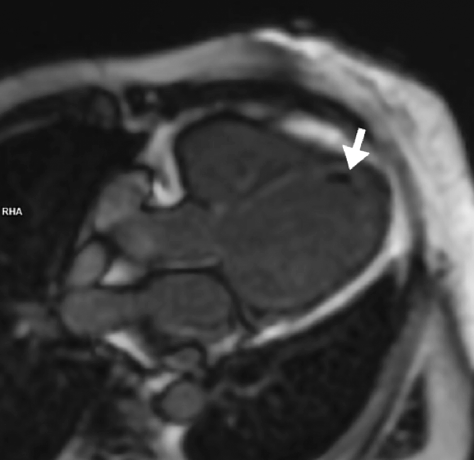
Massive pulmonary embolism (PE) is a life-threatening condition typically requiring systemic thrombolysis. The presence of a left ventricular (LV) thrombus represents a relative contraindication due to the high risk of systemic embolization, requiring individualized management. We present a 73-year-old woman with a history of non-Hodgkin lymphoma in remission, severe LV dysfunction from chemotherapy and radiotherapy, permanent atrial fibrillation under apixaban, and stage 3 chronic kidney disease. She presented with progressive dyspnea, edema, and syncope. On admission, she presented with cardiogenic shock. Imaging confirmed massive bilateral PE and an LV intracavitary thrombus. Thrombolysis was contraindicated due to multiple high-risk factors: LV thrombus, ongoing anticoagulation, advanced age, and renal dysfunction. Management consisted of therapeutic anticoagulation with unfractionated heparin, vasopressor and inotropic support, and close monitoring, showing progressive clinical improvement. This case highlights the complexity of managing massive PE in cardio-oncology patients and underscores the need for individualized strategies when thrombolysis poses unacceptable risks.
Descargas
Referencias
Konstantinides SV, Meyer G, Becattini C, Bueno H, Geert-Jan G, VeliPekka H, et al. 2019 ESC Guidelines for the diagnosis and management of acute pulmonary embolism. Eur Heart J. 2020;41(4):543603. doi: 10.1093/eurheartj/ehz405.
Kearon C, Akl EA, Ornelas J, Blaivas A, Jimenez D, Bounameaux H, et al. Antithrombotic Therapy for VTE Disease: CHEST Guideline and Expert Panel Report. Chest. 2016;149(2):315352. doi: 10.1016/j. chest.2015.11.026.
Piazza G. Advanced management of intermediate- and high-risk pulmonary embolism. J Am Coll Cardiol. 2020;76(18):2117-2127. doi: 10.1016/j.jacc.2020.05.028.
Rouleau SG, Casey SD, Kabrhel C, Vinson DR, Long B. Management of high-risk pulmonary embolism in the emergency department: A narrative review. Am J Emerg Med. 2024;79:1-11. doi: 10.1016/j. ajem.2024.01.039.
Zuin M, Lang IM, Chopard R, Sharp ASP, Byrne RA, Rigatelli G, et al. Innovation in catheter-directed therapy for intermediate-highrisk and high-risk pulmonary embolism. JACC Cardiovasc Interv. 2024;17(19):2259-2273. doi: 10.1016/j.jcin.2024.07.033.
Rashedi S, Leyva H, Hamade N, Pfeferman MB, Ortega-Paz L, Sadeghipour P, et al. Fibrinolytic Therapy for Thromboembolic Diseases: Approved Indications and Future Directions. J Am Coll Cardiol. 2025;86(14):1065-1087. doi: 10.1016/j.jacc.2025.07.061.
Curigliano G, Lenihan D, Fradley M, Ganatra S, Barac A, Blaes A, et al. Management of cardiac disease in cancer patients throughout oncological treatment: ESMO consensus recommendations. Ann Oncol. 2020;31(2):171-190. doi: 10.1016/j.annonc.2019.10.023.
Lancellotti P, Suter TM, López-Fernández T, Galderisi M, Lyon AR, Van Der Meer P, et al. Cardio-oncology services: rationale, organization, and implementation. Eur Heart J. 2018;40(22):1756-1763. doi: 10.1093/eurheartj/ehy453.
Núñez-Gil IJ, Luaces M, García-Guimaraes M, Fernández-Pérez C, Viana-Tejedor A, Macaya C, et al. Mechanical reperfusion in high-risk pulmonary embolism: real-world experience. JACC Cardiovasc Interv. 2019;12(24):2472-84. doi: 10.1016/j.jcin.2019.09.042.
Watson T, Shantsila E, Lip GY. Mechanisms of thrombogenesis in atrial fibrillation: Virchow’s triad revisited. Lancet. 2009;373(9658):155-66. doi: 10.1016/S0140-6736(09)60040-4.
Descargas
Publicado
Número
Sección
Licencia
Derechos de autor 2026 La revista es titular de la primera publicación, luego el autor dando crédito a la primera publicación.

Esta obra está bajo una licencia internacional Creative Commons Atribución 4.0.